Computed Properties
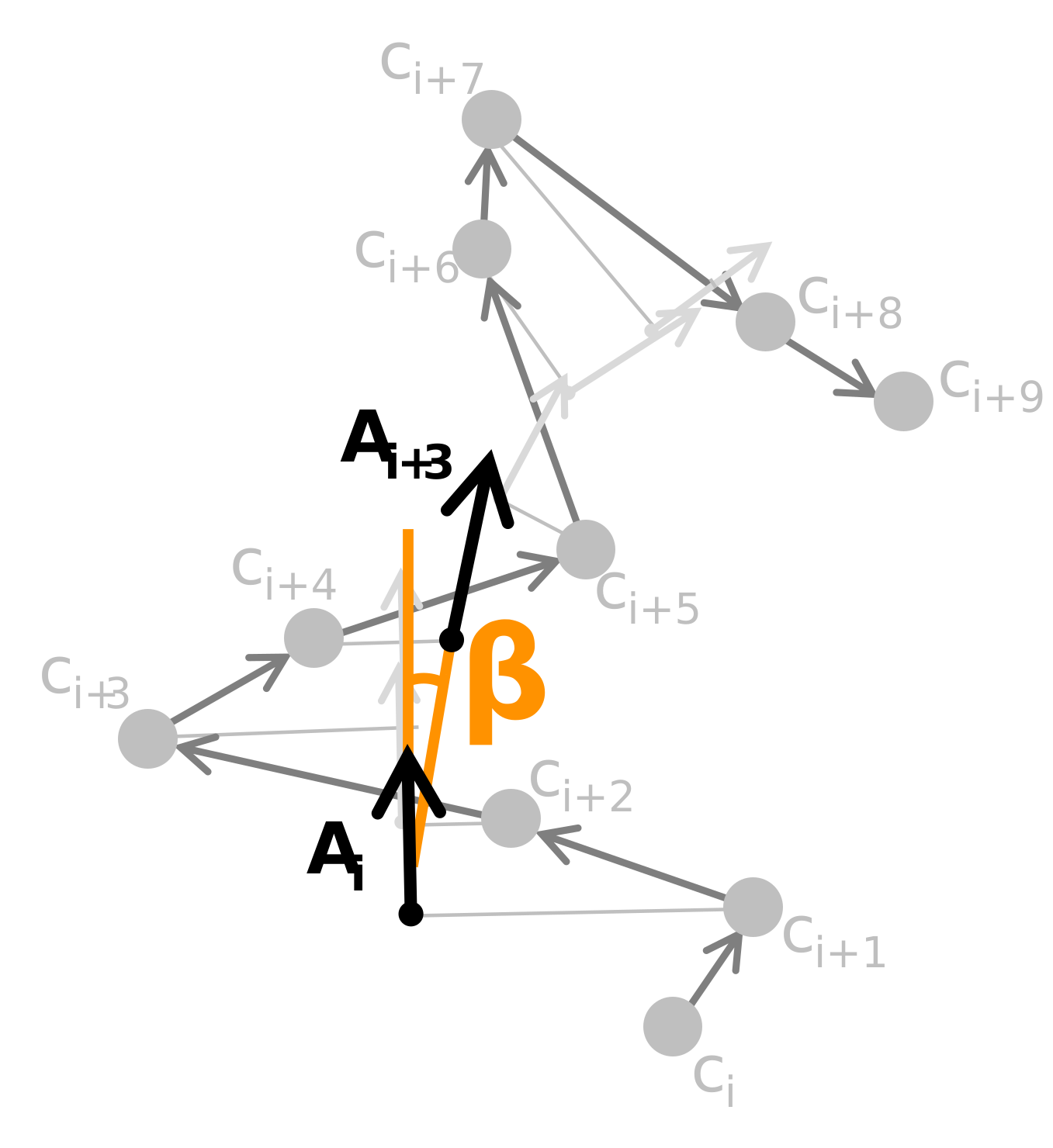
Helanal follows the procedure of Sugeta and Miyazawa [Sugeta1967] and is based on the Fortran HELANAL implementation by [Bansal2000]. Properties are computed for a ‘window’ of four consecutive \(C_α\) atoms, and this window is then slid along the length of the helix in one-residue steps.
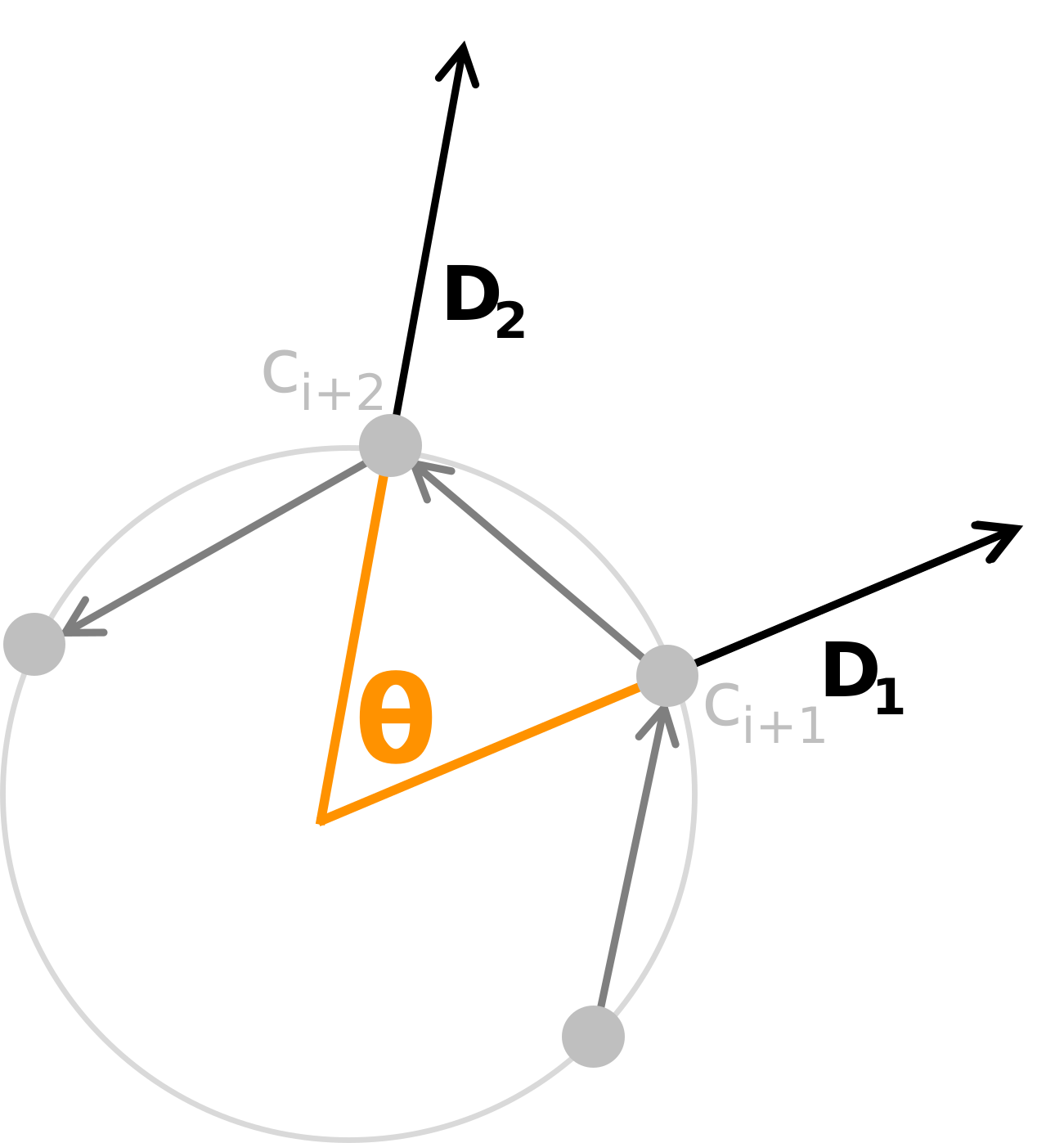
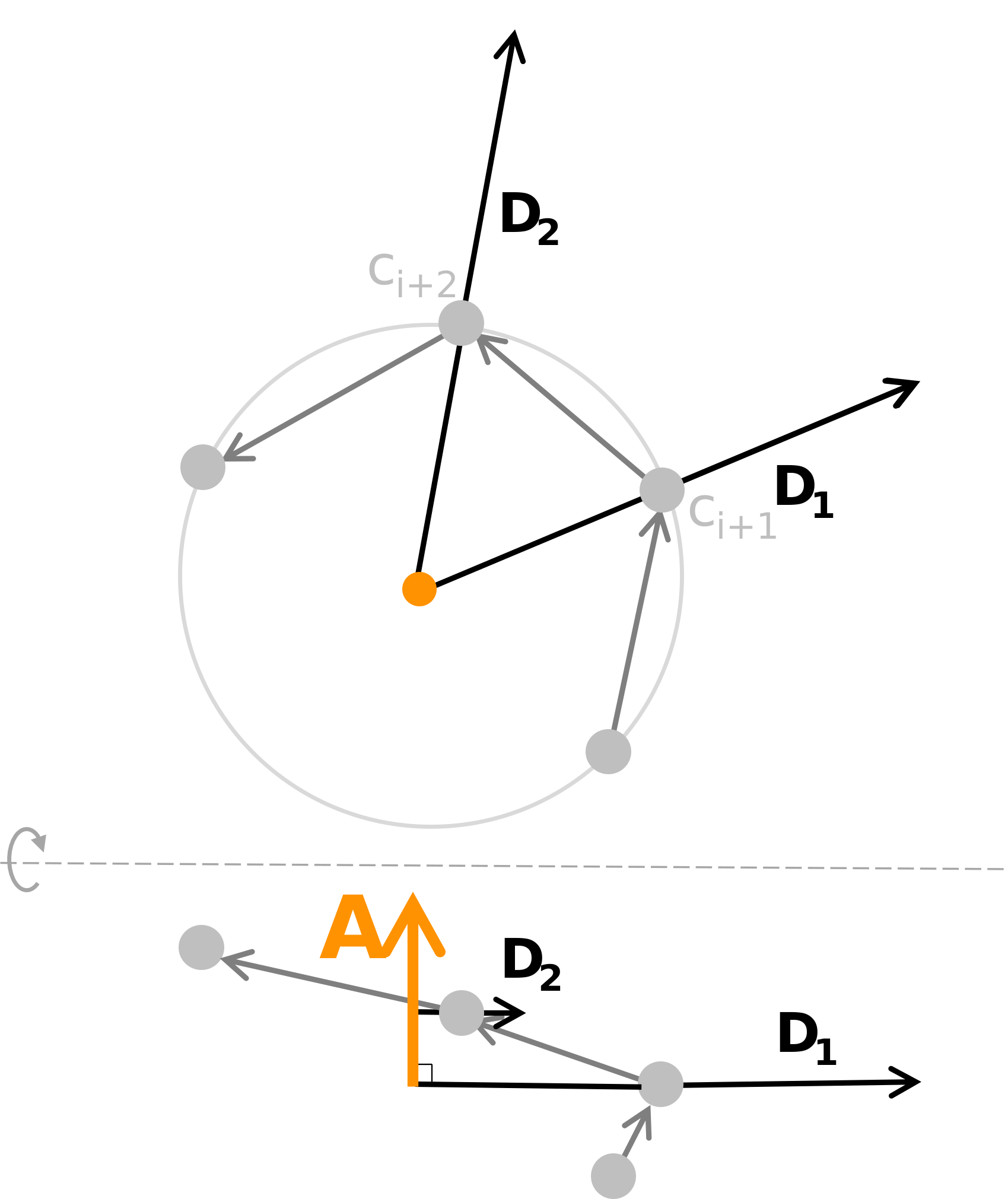
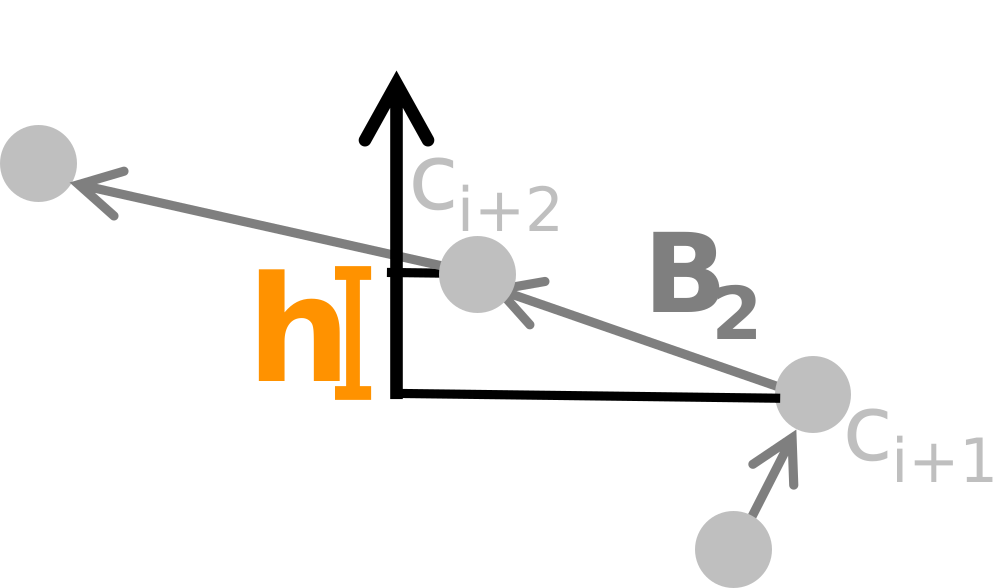
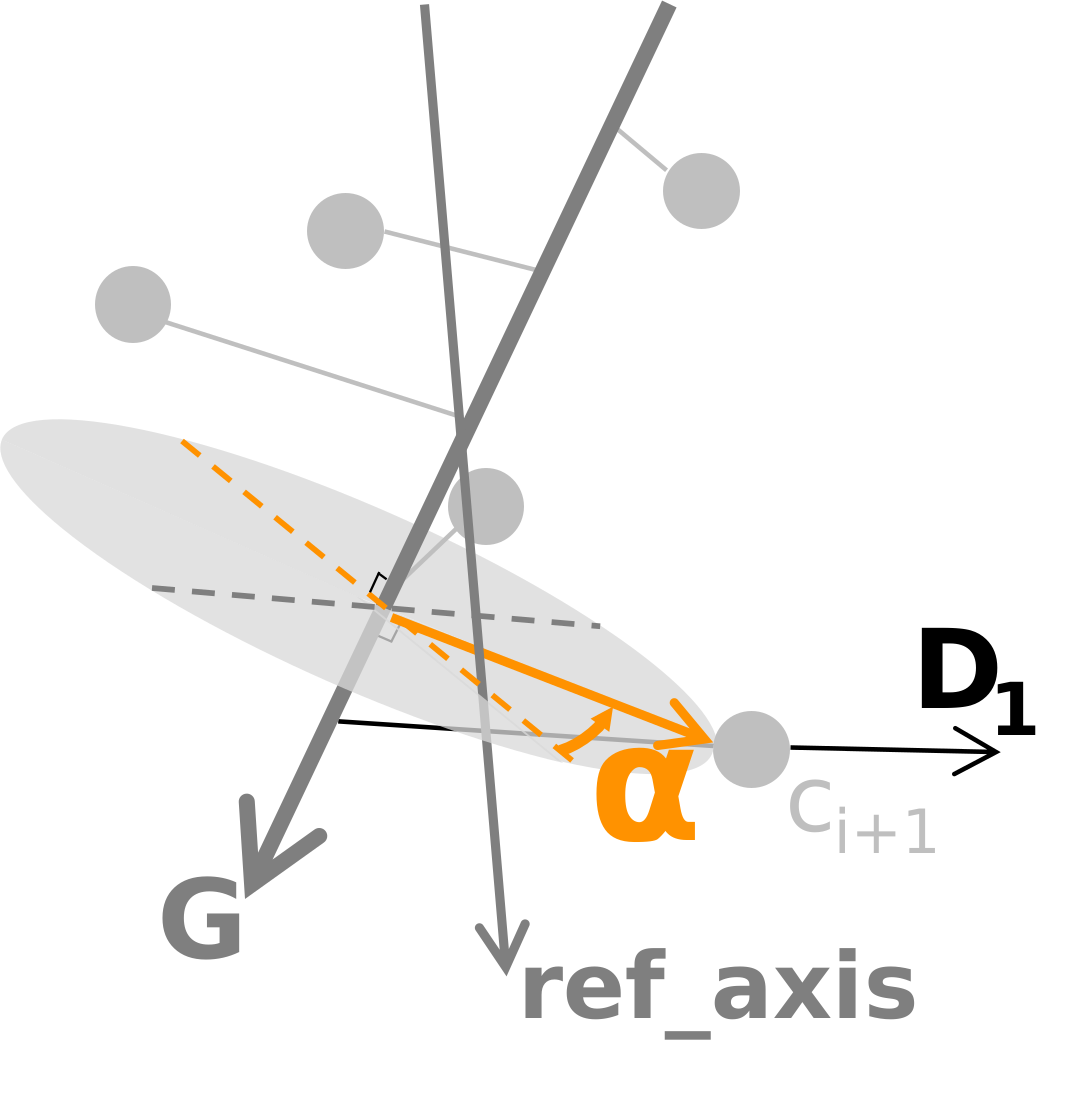
For each window consisting of atoms \(c_i\), \(c_{i+1}\), \(c_{i+2}\), \(c_{i+3}\), the vectors \(\mathbf{B_1}\), \(\mathbf{B_2}\), and \(\mathbf{B_3}\) joining (respectively) atoms \(c_i\) → \(c_{i+1}\), \(c_{i+1}\) → \(c_{i+2}\) and \(c_{i+2}\) → \(c_{i+3}\) are calculated, along with the vectors \(\mathbf{D_1} = \mathbf{B_1} - \mathbf{B_2}\) and \(\mathbf{D_2} = \mathbf{B_2} - \mathbf{B_3}\).
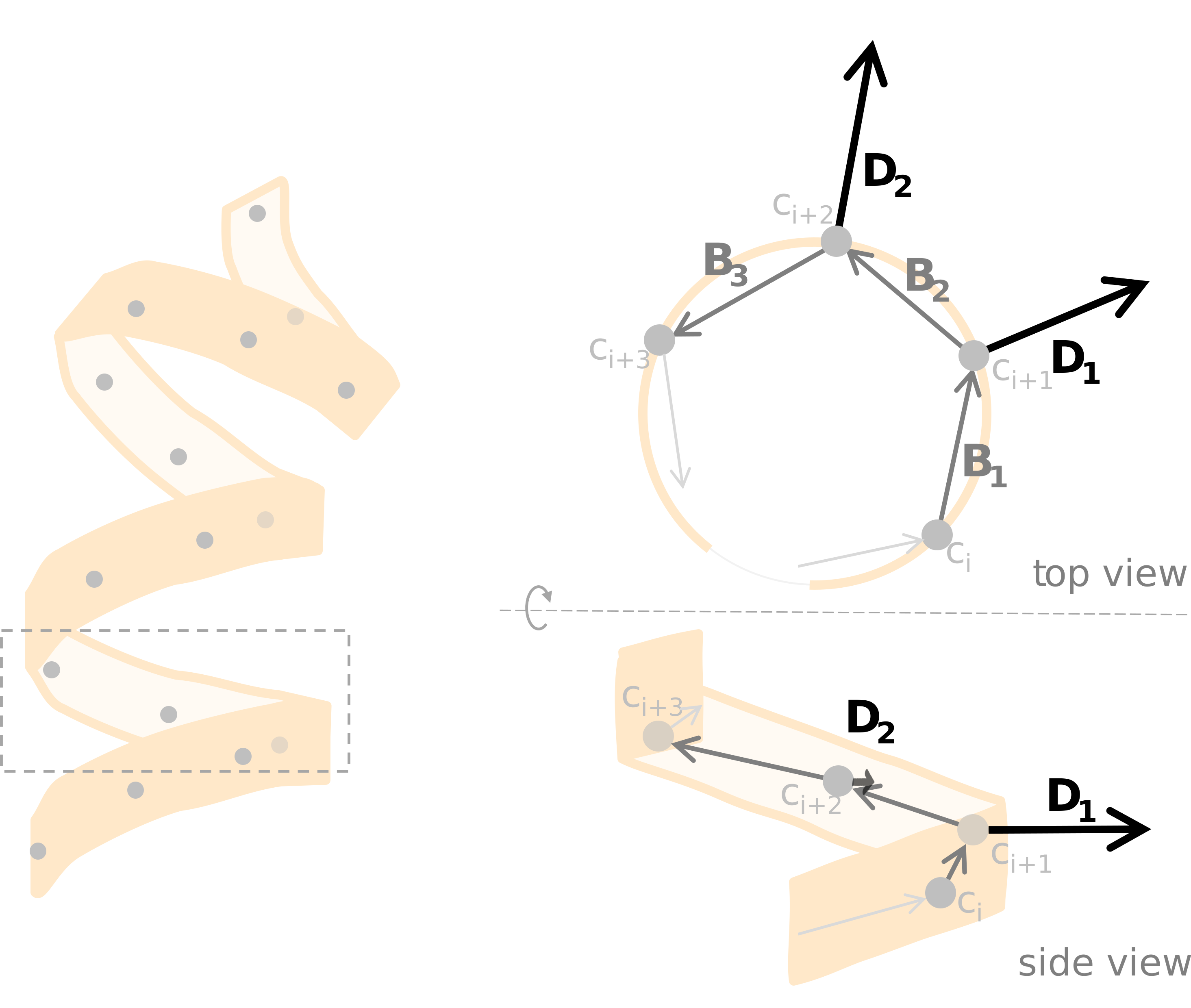
From these, the helix properties below are computed in each simulation frame.
These properties are available in .results as arrays, the shape of which
depends on the number of residues \(n_{res}\) (and the property being
calculated). Note that each helix must contain at least 9 residues.
If multiple helices are being analysed, the results are returned as lists (of length \(n_{helices}\)) of arrays of the indicated shape.
All angles are in degrees.
Description |
Shape |
|
|---|---|---|
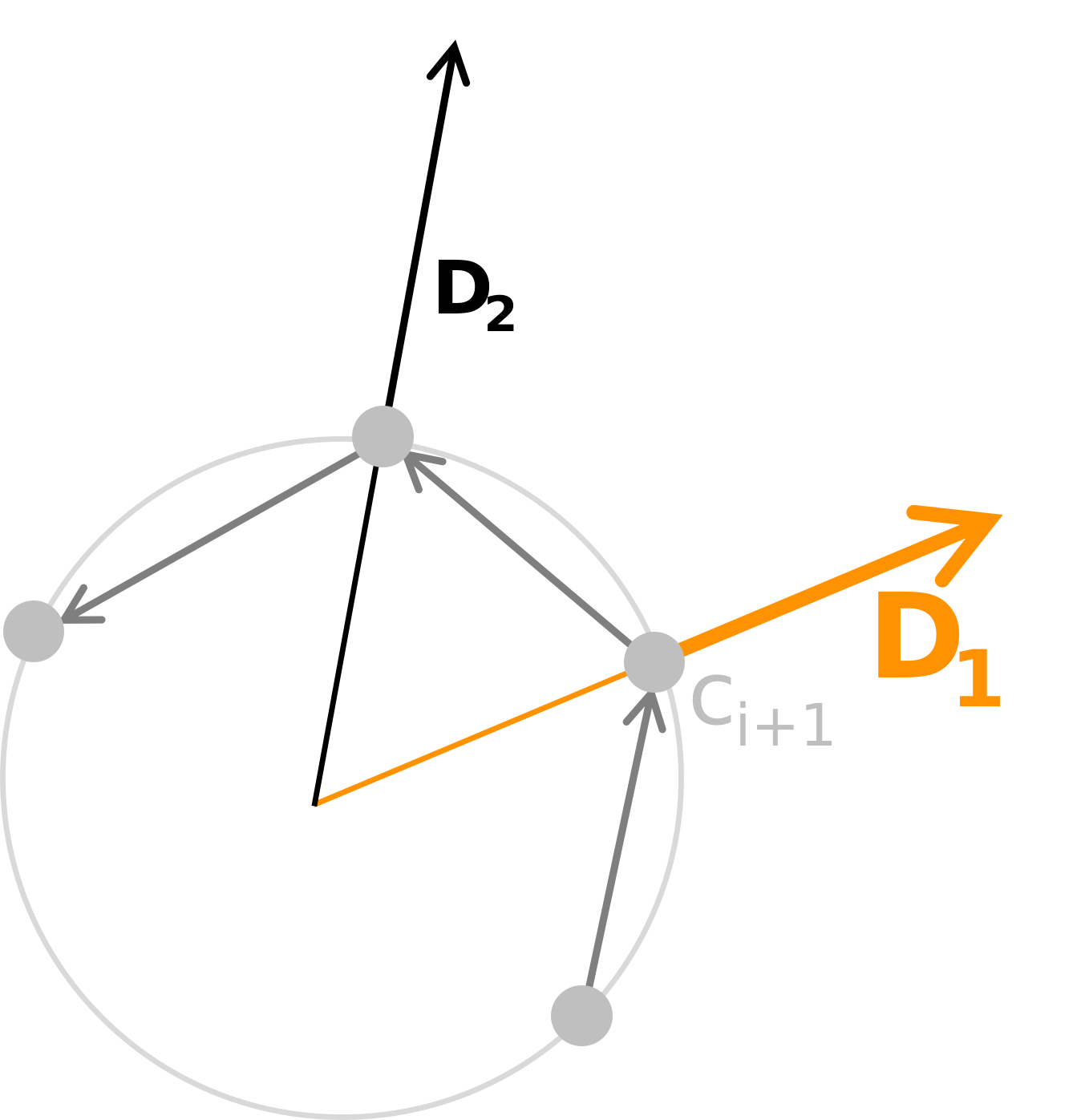
Assuming ~even spacing of the atoms, this vector will bisect the angle formed by (\(c_i,c_{i+1},c_{i+2}\)), lie approximately in the plane perpendicular to the helix axis, and point from the projected local helix centre to the atom \(c_{i+1}\). |
|
\((n_{frames},\) \(n_{res}-2, 3)\) |
|
|
\((n_{frames},\) \(n_{res}-3)\) |
|
\((n_{frames},\) \(n_{res}-3)\) |
|
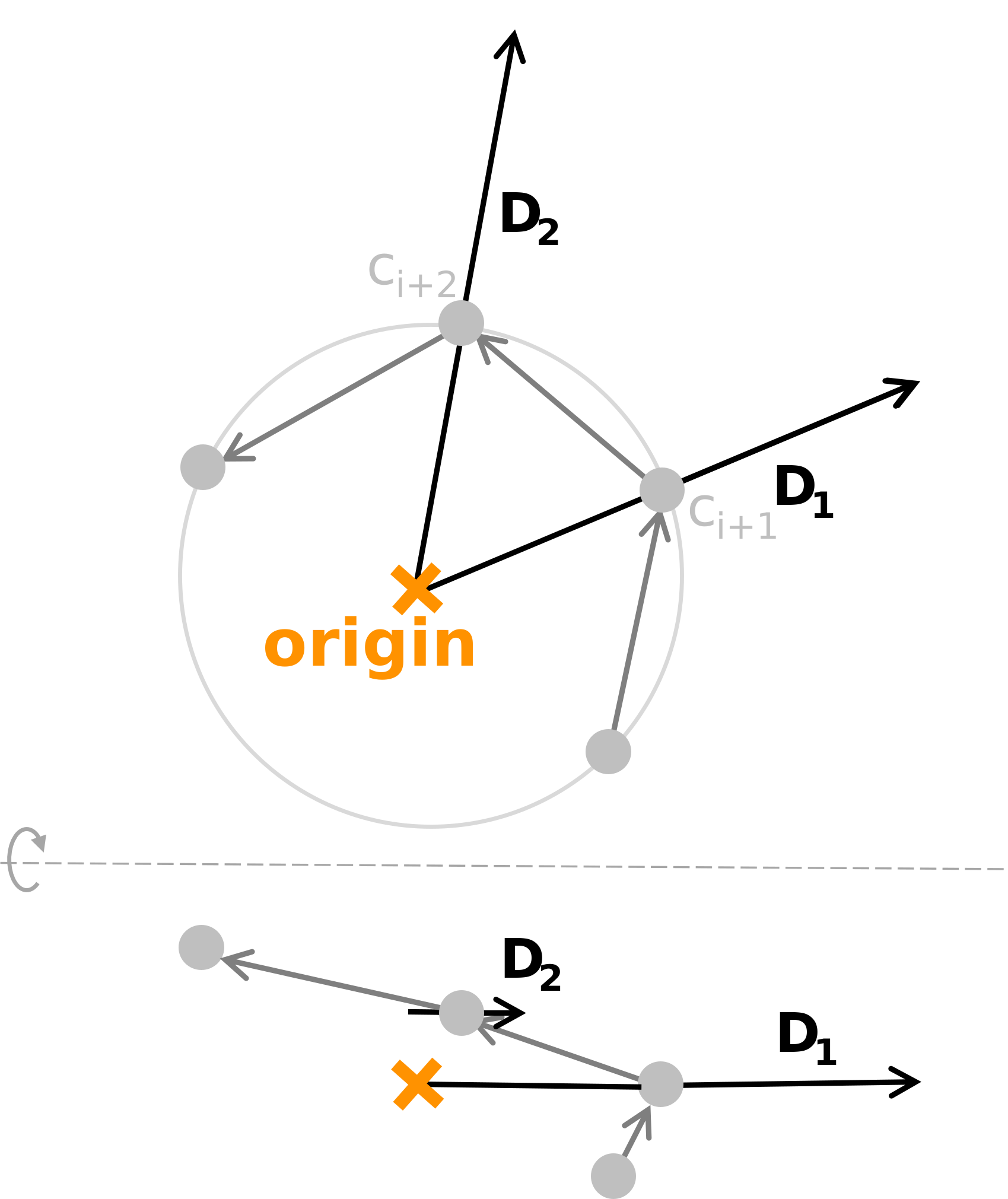
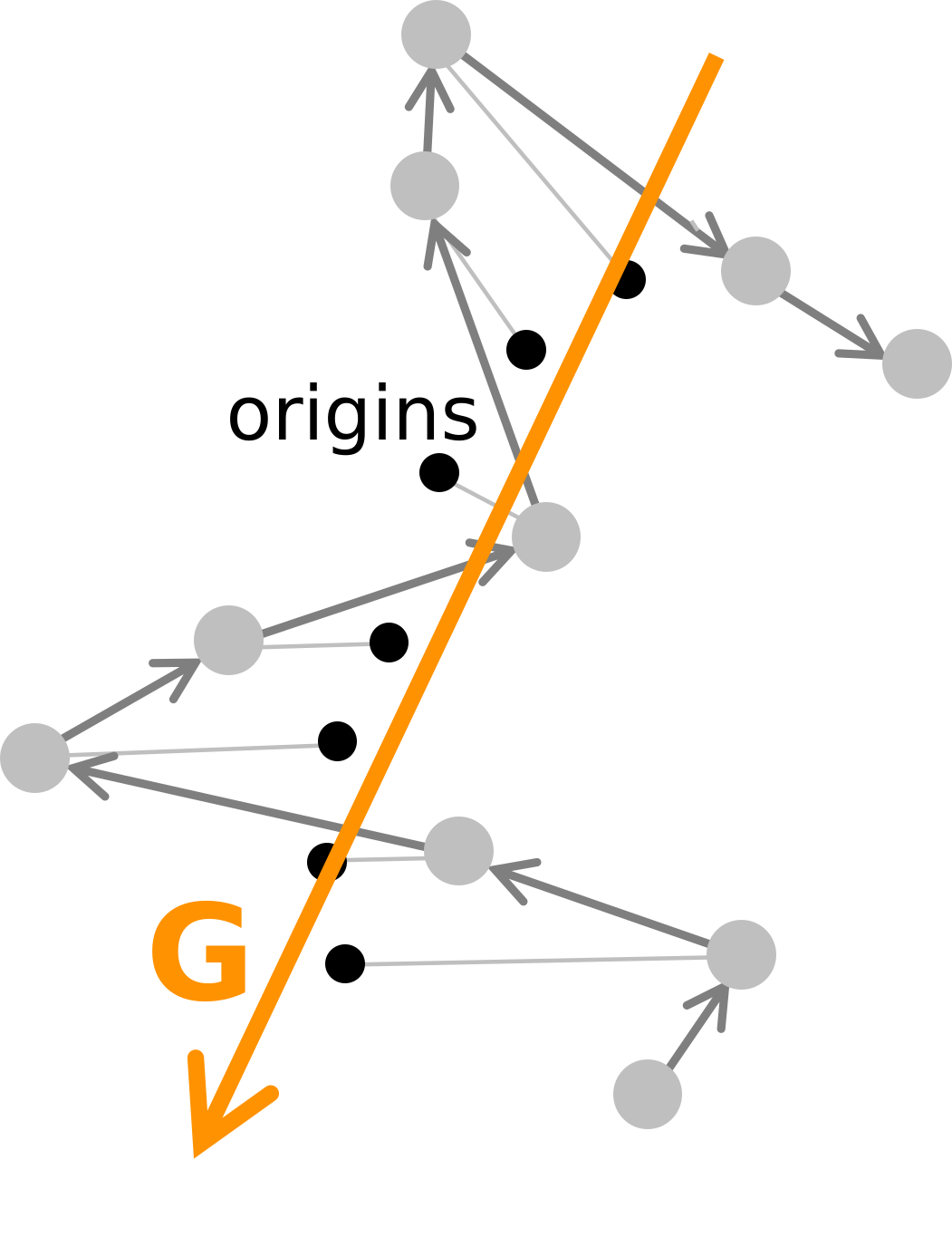
Calculated as the approximate intersection of \(\mathbf{D_1}\) and \(\mathbf{D_2}\) projected on the perpendicular plane, assuming ~even spacing of atoms. |
|
\((n_{frames},\) \(n_{res}-2,\) \(3)\) |
|
|
\((n_{frames},\) \(n_{res}-3,\) \(3)\) |
|
|
\((n_{frames},\) \(n_{res}-3)\) |
|
|
\((n_{frames},\) \(n_{res}-6)\) |
|
\((n_{frames},\) \(n_{res}-3,\) \(n_{res}-3)\) |
|
|
|
\((n_{frames},\) \(3)\) |
|
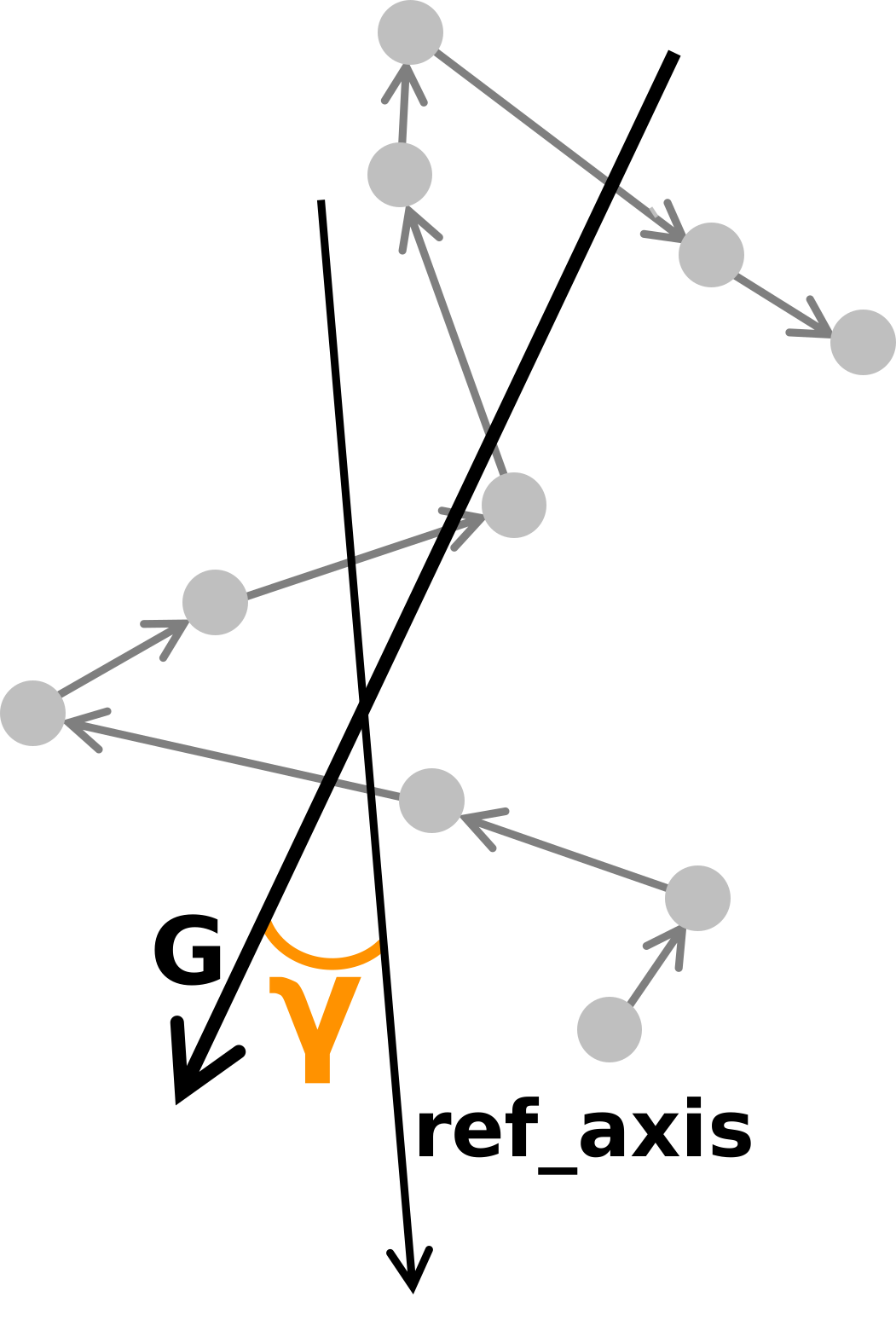
|
\((n_{frames},)\) |
This is measured as the angle between the ref_axis to the local_helix_directions vector \(\mathbf{D}\), when both are projected on a plane perpendicular to global_axis. |
|
\((n_{frames},\) \(n_{res}-2)\) |
A summary of the results, including mean, sample standard deviation and mean
absolute deviation is also provided in results.summary.